A Completely Unbiased Guide to Hiring an Agency Partner
Most companies don’t hire an agency because everything is working perfectly. An agency engagement usually means something meaningful has changed or is about to: a rebrand, a new market, a leadership transition, a strategic reset. In these moments, the partner you choose matters more than most people realize.
Having spent time on both sides of the table, sometimes leading client-side marketing teams, sometimes running agencies, and sometimes just sitting somewhere at the table hoping the meeting would end, we’ve seen agency selection done well. We’ve also seen it done poorly and for reasons that had very little to do with success.
Whether this is your first time hiring an agency or you’ve managed agency relationships for years, the goal here is simple: help you approach the process more deliberately and avoid some very common (and expensive) mistakes.
If you’ve had the privilege of undergoing a major home renovation, you’ll recognize a lot of similarities in the process. You know something isn’t working. You have a rough idea of what “better” could look like. You need to bring in an expert to help solve problems pragmatically and creatively, without the budget spiraling or the contractor quitting halfway through the job.
Start by Getting Aligned Internally (Before You Call Anyone)
Before you talk to agencies, talk to yourselves.
One of the biggest friction points in agency engagements is internal misalignment that shows up too late. Before you even start looking for help, ask a few basic questions:
Are we aligned on the business problem we’re actually trying to solve?
Are we looking for a long-term partner or a project-based specialist?
Who are the real decision-makers, and who needs to be consulted versus informed?
In renovation terms, are you repainting a room, reworking the floor plan, or rebuilding the foundation?
Starting a brand or marketing initiative without internal buy-in is like starting a renovation without your partner’s approval. Someone is going to be unhappy once the walls come down.
Define the Objective, Not Just the Work
Many briefs focus on outputs: a new logo, a website, a campaign. Fewer clearly articulate outcomes: entering a new category, correcting strategic drift, supporting growth, or aligning leadership around a shared narrative.
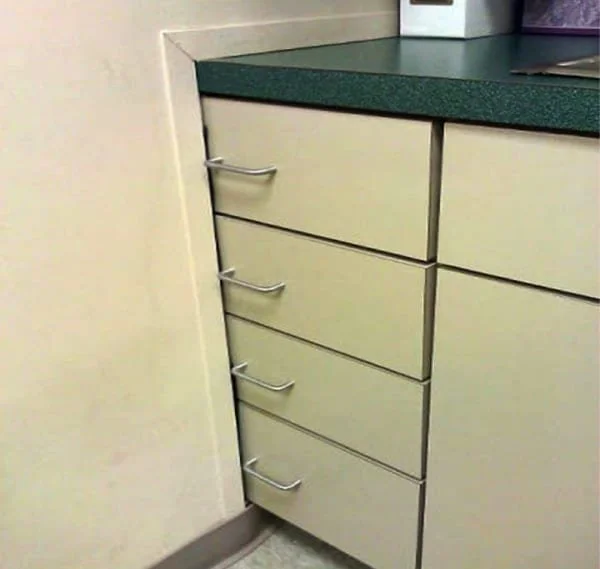
Most competent builders can install attractive kitchen cabinets. An architect’s job is to step back and ask whether the kitchen actually works for how you live before deciding what should be built at all.
If you can’t clearly explain why the work matters, you risk hiring a firm that delivers a polished solution to the wrong problem.
Don’t Hire a Builder to Solve an Architect Problem
This is where things often go sideways.
A common scenario: a company decides it “needs a new website,” hires a web firm, and halfway through realizes the real issue isn’t the site. It’s unclear positioning, a muddled story, or a brand that never quite got defined.
The web firm may do excellent work, but they were hired to build, not to decide what should be built.
In renovation terms, this is hiring a builder before consulting an architect.
At this stage, it helps to be honest about what kind of expertise you actually need:
The Architect (strategist)
Helps define the problem and design the blueprint.The Builder (design or creative specialist)
Executes against a defined plan with depth.Design-and-build (one-stop-shop)
One partner doing both, trading some specialization for simplicity and accountability.
There’s no universally right answer. There are only tradeoffs. Problems arise when expectations don’t match the role being hired.
And Sometimes, You Don’t Know What You Need Yet
In early-stage or transitional moments, you may not have a clean brief or a perfectly articulated problem. That’s normal.
Strong partners are comfortable in the messy middle. They can lead discovery, ask uncomfortable questions, and surface risks you haven’t named yet.
This is also when cattle-call-style RFPs tend to do more harm than good. RFPs are designed for buying commodities. Conversations are for choosing partners. A generic, open RFP forces premature specificity and often favors firms that are good at filling out forms, not framing problems.
Evaluate Fit, Not Just the Portfolio
Portfolios show what got made, not how it got made.
To understand fit, focus on the working relationship:
Who is actually on the account day to day?
How do decisions get made?
What happens when things go off plan?
The real evaluation can only happen in open and honest discussions with prospective partners. Be wary of those who simply show up and read through a creds deck and make the entire discussion about themselves.
Be Clear and Upfront About Your Budget
Talk about money. Early.
Being vague about budget doesn’t make the conversation easier or potentially save you money; it just delays the hard part. A budget isn’t just a price tag. It’s a set of constraints. It tells the partner whether they’re sourcing laminate or limestone. Both are valid. They just require different approaches. The best partners are going to be able to give you a range of solutions custom tailored to your budget.
Run a Transparent, Respectful Process
Limit the number of agencies involved so you can evaluate each one meaningfully. Be clear about timelines and decision criteria.
And never ask for unpaid speculative work.
In renovation terms, that’s asking for free blueprints before hiring the architect who’s supposed to design something specific to your house. It’s not just disrespectful. It short-circuits the research and discovery that lead to better outcomes.
Choosing an agency partner is less about shopping for services and more about managing risk during change. The right partner brings clarity where there’s ambiguity and discipline where there’s complexity.
We believe the best work results in structures that hold up long after the project is finished. If you’re navigating these decisions, we offer complimentary Office Hours to talk through your challenges and pressure-test your assumptions, whether or not we’re the right fit.